The sensor in the water.
A pressure sensor records the groundwater level. Temperature, conductivity or other parameters can be added depending on the task.

Keep track of changes below the surface. Monitor groundwater continuously with sensors, data loggers and software selected for your monitoring site.
Sensors, data loggers and analysis work together as a system. The equipment is selected for your measurement task and location.
A pressure sensor records the groundwater level. Temperature, conductivity or other parameters can be added depending on the task.
The logger stores the readings. Retrieve them via Bluetooth or transmit them over the mobile network with the Web LTX.
View hydrographs and monitoring sites in Sensormanager. Set up thresholds and notifications for connected stations.
A look at real installations: mounting is part of the solution, along with sensors, power and access to data.
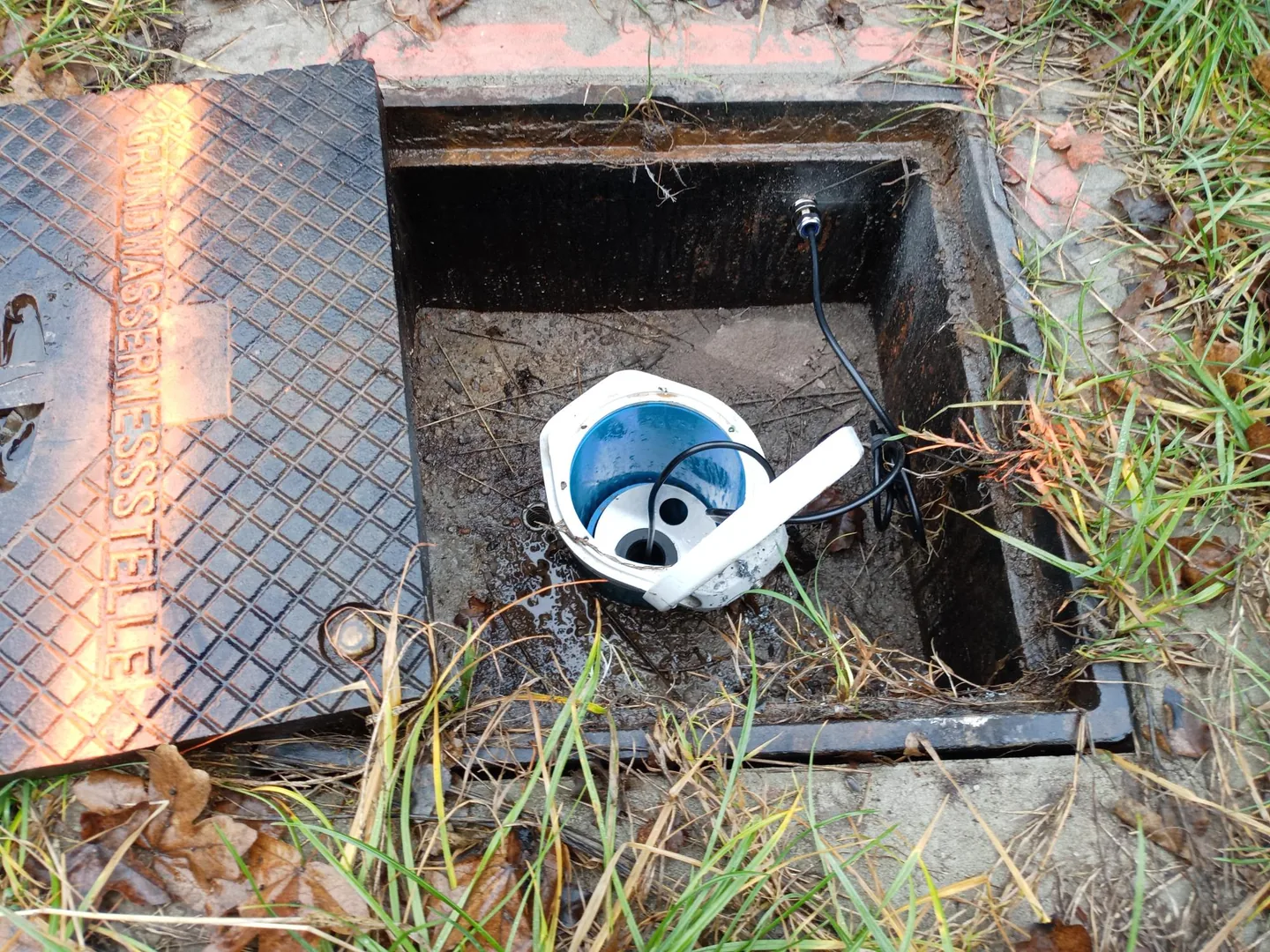
Open groundwater monitoring chamber with an installed logger and cable feed-through.
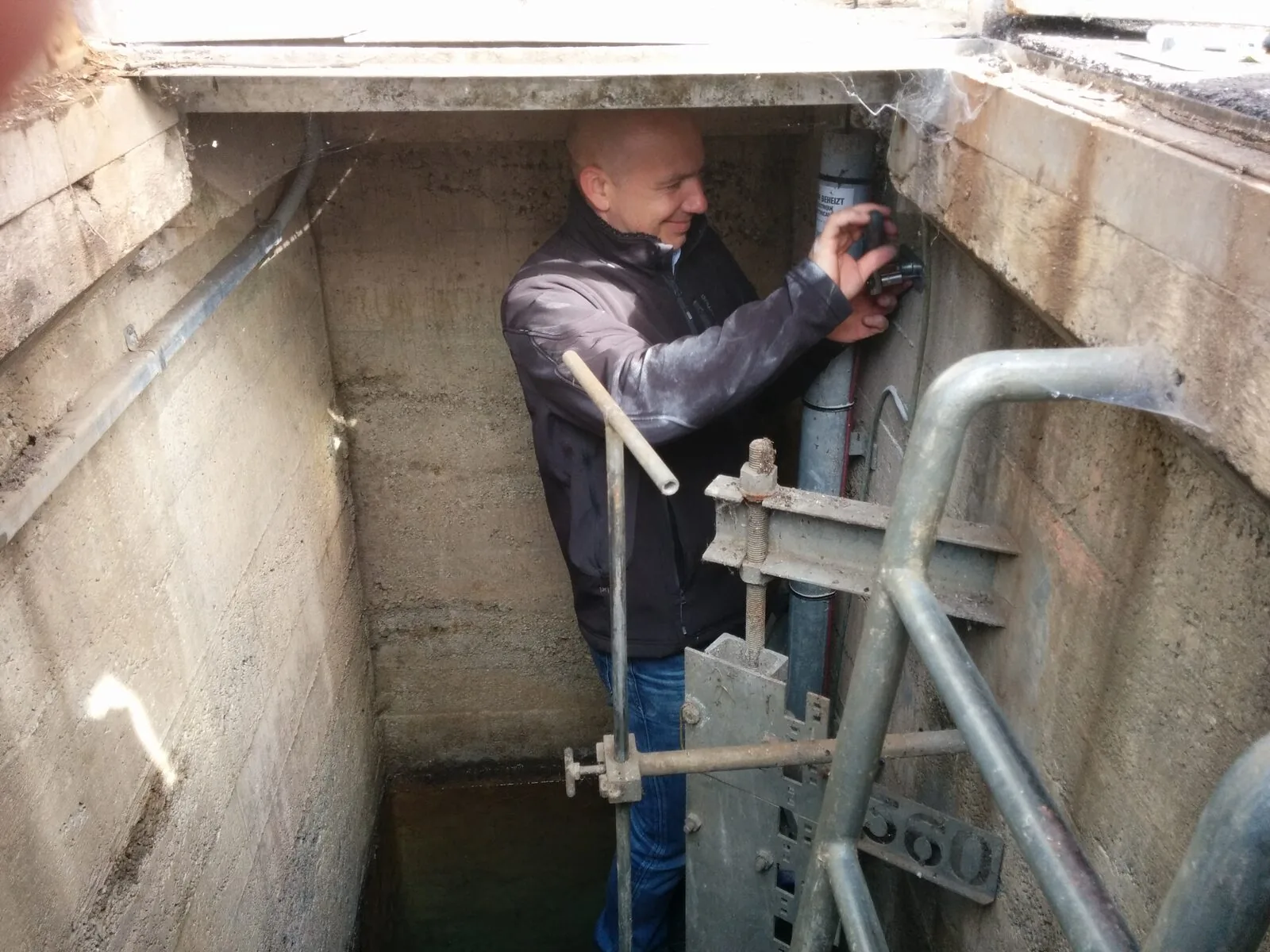
A technician working on monitoring equipment in a chamber.
Start with the logger, sensors or a complete station. We help match the components to your application.
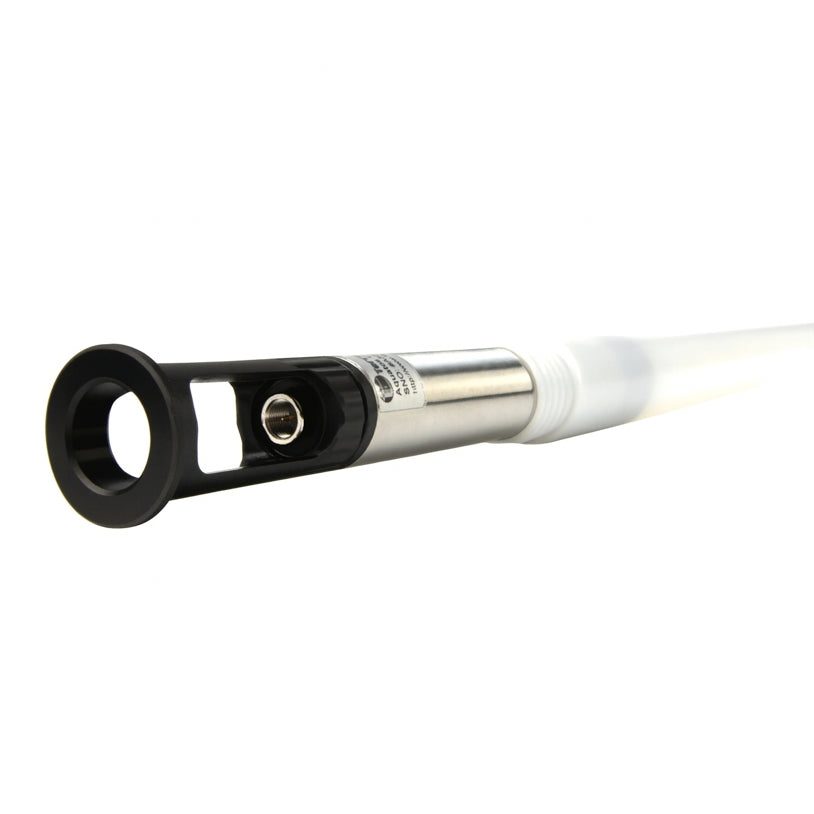
Compact data logger for gauges and groundwater sites with Bluetooth readout.
View product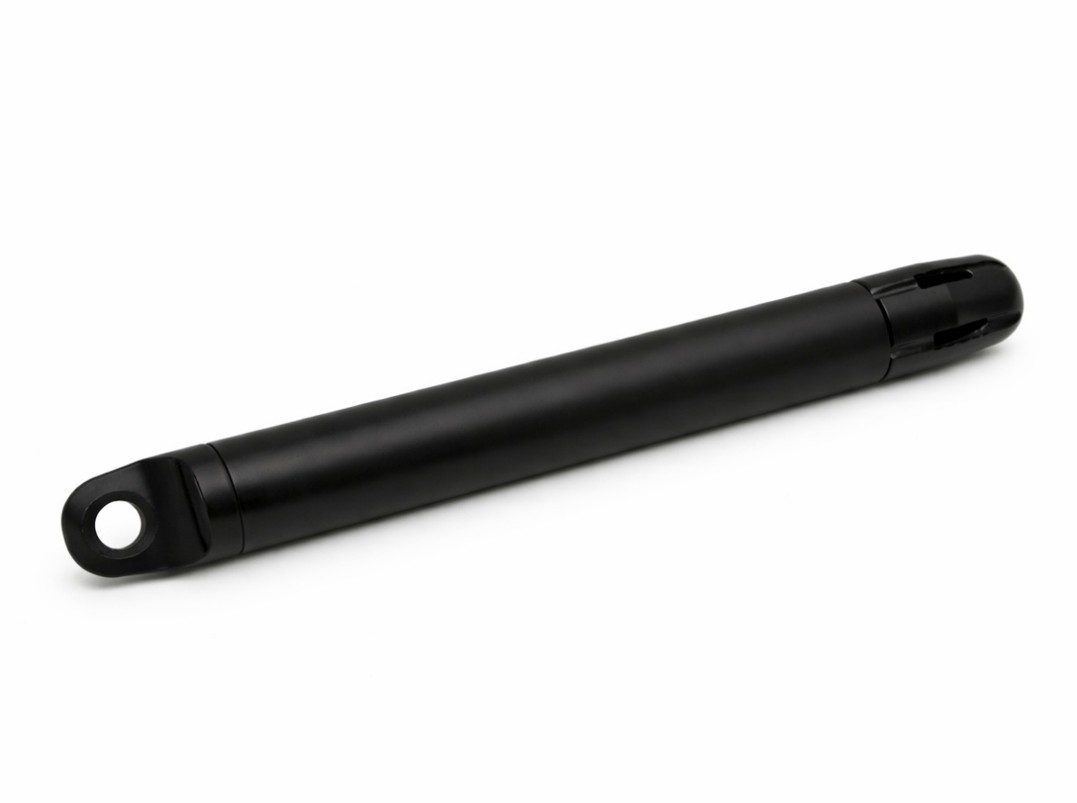
Sensor and logger in a compact submersible probe for confined installations.
View product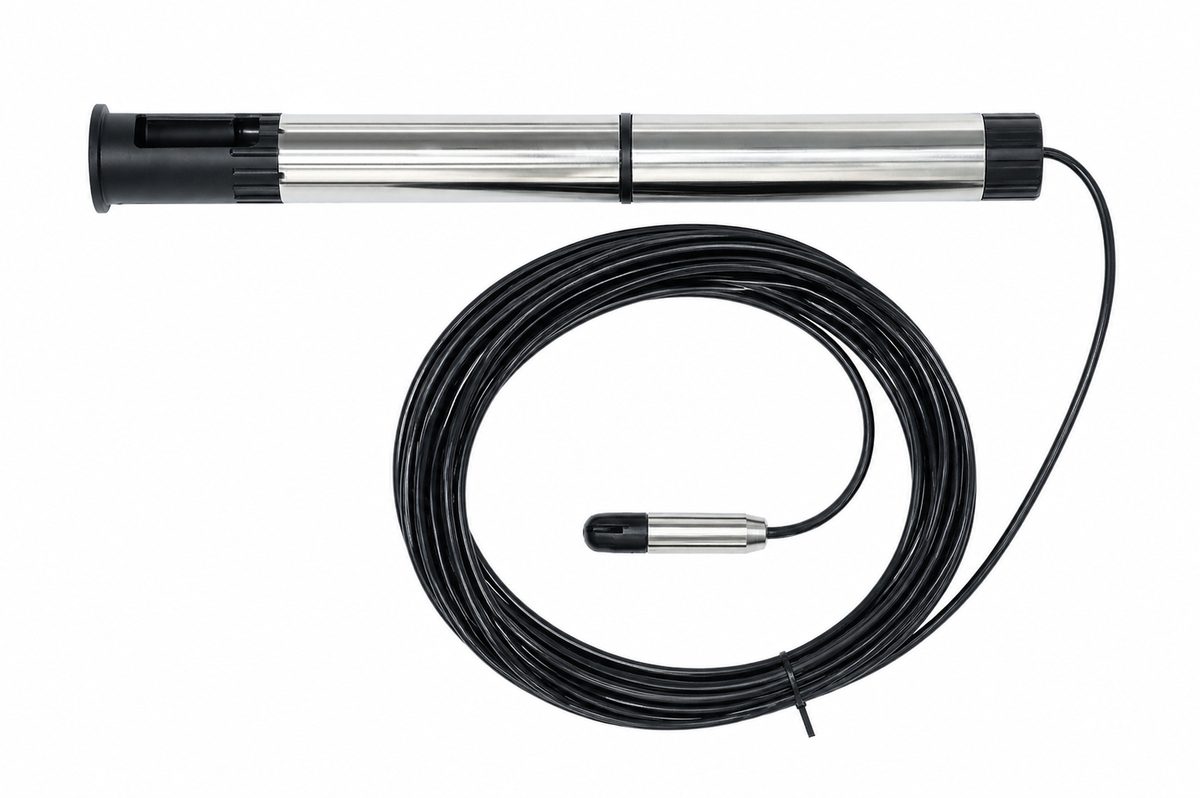
Data logger with mobile transmission for monitoring sites with central data access.
View product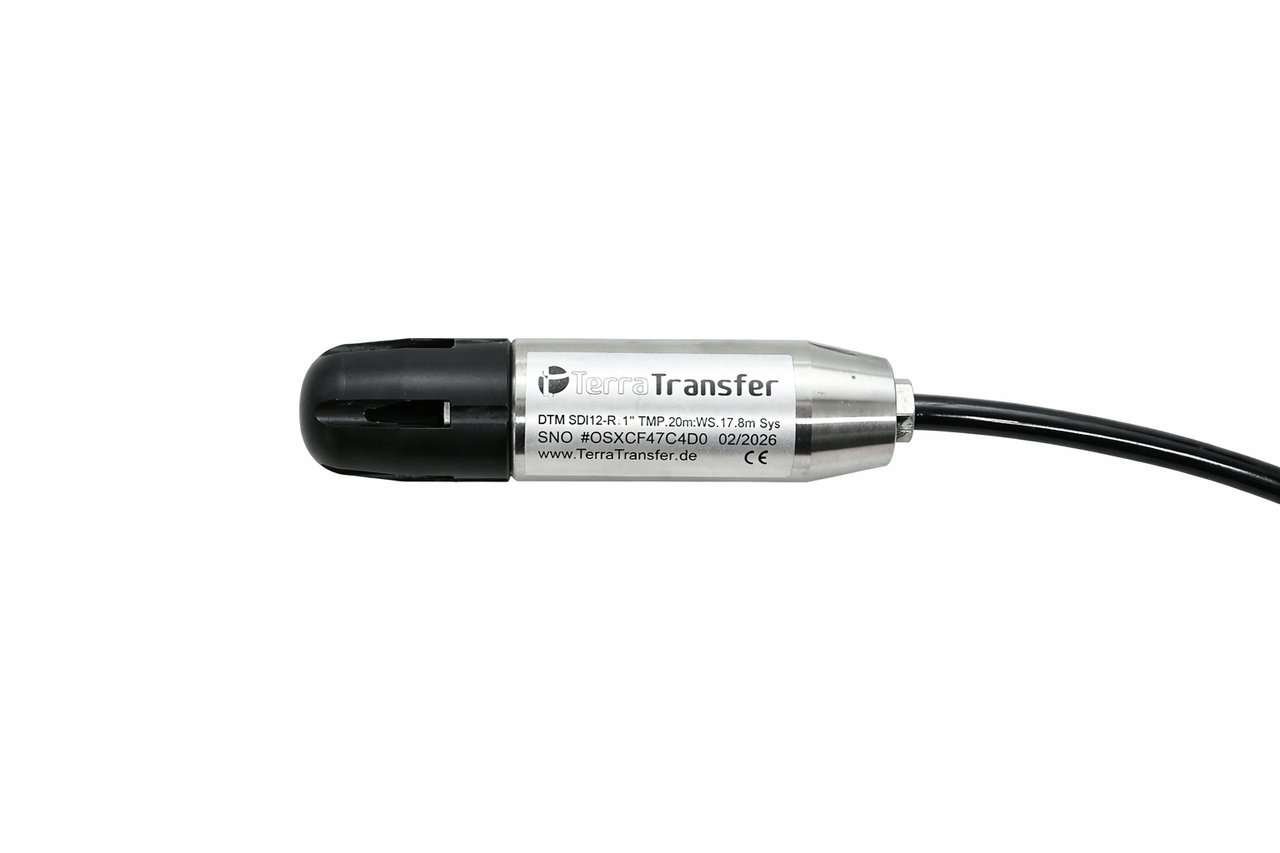
Sensors and interfaces for your chosen parameters and existing equipment.
View productMeasurement parameters, installation and methodological notes in detail.
Groundwater gauge networks are the largest field of application by volume in water management. Aquatos mini or Web LTX measure the groundwater level via a pressure transducer in the gauge tube — read out locally over Bluetooth or in real time over cellular. Logger, chamber cover, casing and desiccant are part of our delivery; civil works are handled by the contractor.
Alongside the groundwater level, we capture the chemical status right inside the monitoring well. For the quantitative and chemical status of groundwater bodies under the EU Water Framework Directive, continuous records give a far more complete picture than spot-date sampling.
From a nationwide state monitoring network to a single dewatering site — the same hardware, configured differently for each task.
Monitoring wells built to DVGW W 110 / W 111, construction and development to DVGW W 121; sampling in the sense of DIN EN ISO 22475-1. Suitable for spot-date readings as well as continuous recording. In fissured and karst aquifers, point gauges must be chosen with care — stratification sensing helps here. We capture the groundwater level with a vented gauge sensor (pressure compensated through the vent tube) or with an absolute sensor and separate barometric compensation; for saline or deep groundwater we apply the density correction.
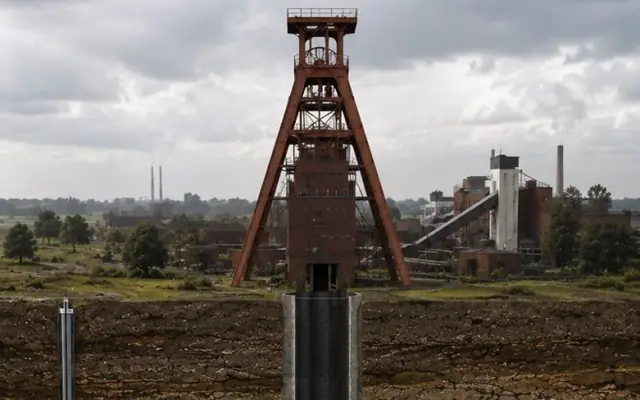 Mine-water monitoring in the Ruhr areaAquatos Web data loggers monitor water level and conductivity in decommissioned shafts for RAG — probes on cables of up to 800 m.
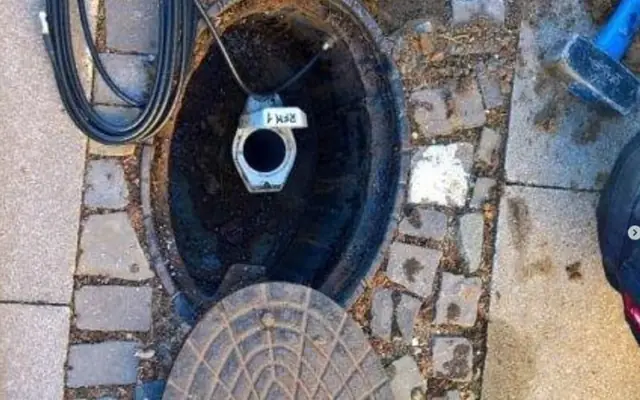 What's under the metal cover? A flush-mount monitoring station.Unremarkable on the pavement, complete underneath: an Aquatos Web logger with rod antenna, vandalism-safe in a flush-mount chamber. Up to ten years of battery life at daily transmission.
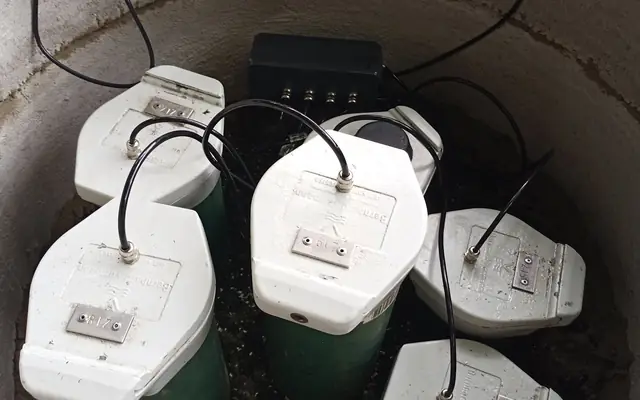 Six gauges, one logger — 24-channel multi-level monitoring in a manholeSix parallel level measurements at one site with a single data logger: with its 24 SDI-12 channels, Aquatos Web LTX reads up to 24 sensors simultaneously. Here six pressure sensors, protected by concrete rings with a signal-permeable plastic cover — compact, cost-efficient, field-proof.
Scroll down — this is how deep our instrumentation reaches into decommissioned shafts.
Tell us the tube diameter, depth and build, and we put together the right logger and equipment.