Where it comes from
Fertiliser from fields and horticulture, discharges from greenhouses and treatment plants, drainage. After rain, seepage water washes a particularly large amount into the water.

Measure nutrient inputs continuously.
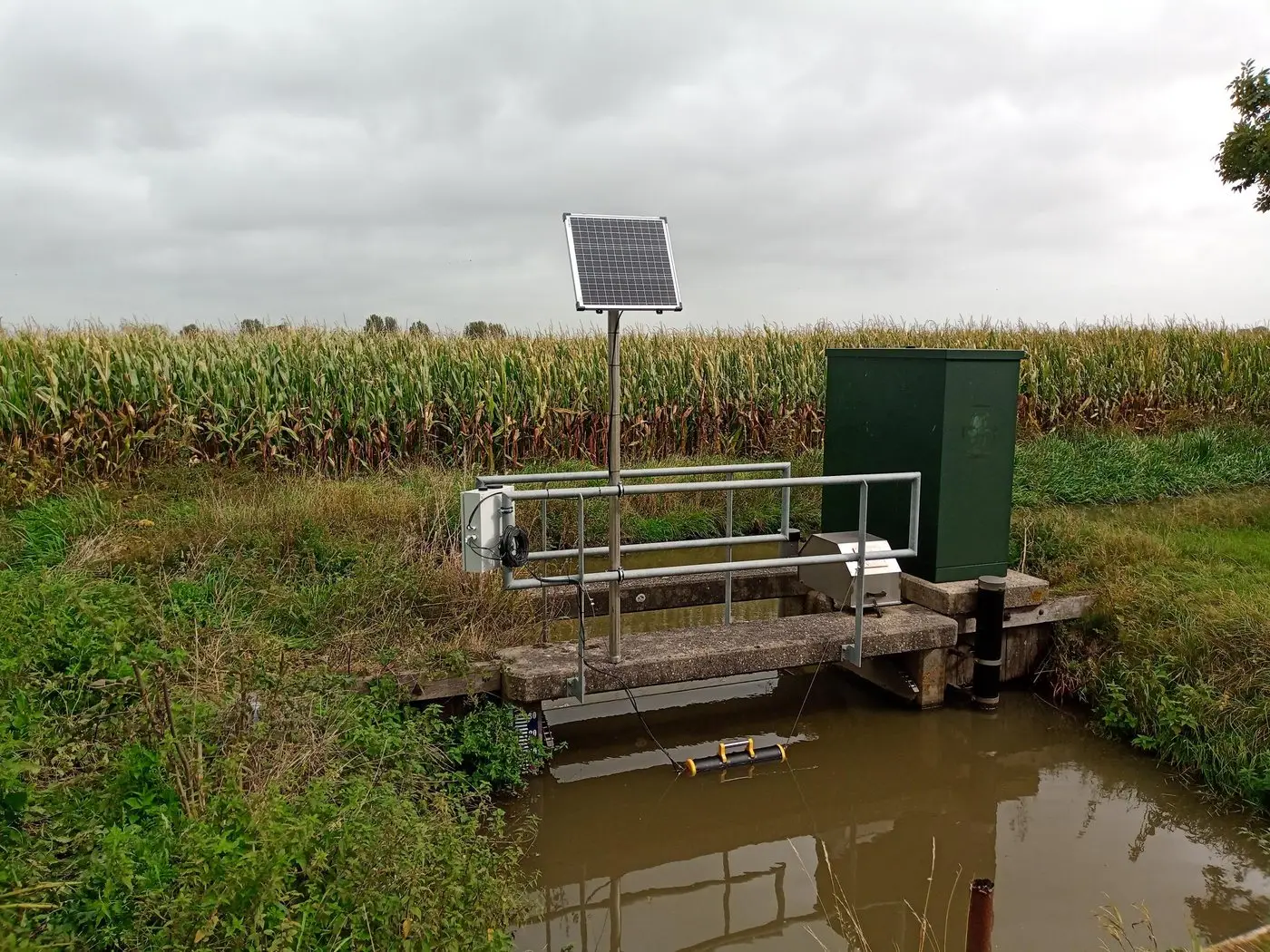
An optical nitrate probe in a float, the Aquatos Web LTX in a cabinet, power from a solar panel and alarms in the Sensormanager. A complete monitoring system that shows when nitrate enters the water and how long it stays there.
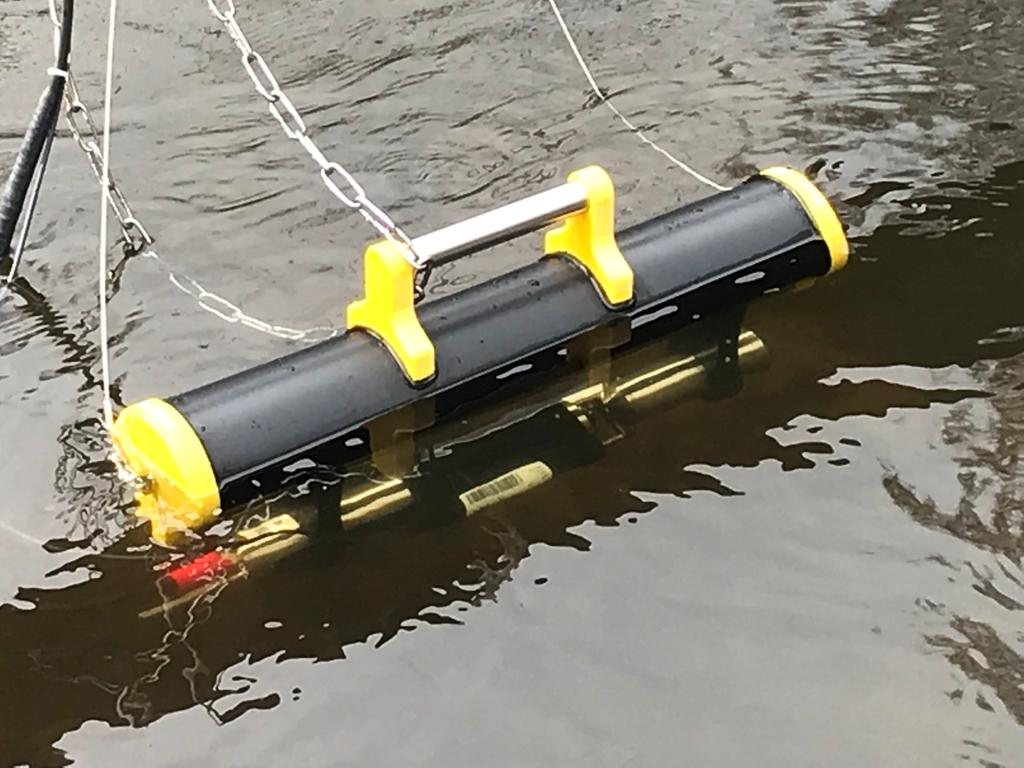 Follows the water level, always measures at the same depth
Nitrate is a plant nutrient contained in every fertiliser. Whatever the plants do not take up ends up in ditches, streams and groundwater. Whether an input has occurred is often decided within a few hours after rain.
Fertiliser from fields and horticulture, discharges from greenhouses and treatment plants, drainage. After rain, seepage water washes a particularly large amount into the water.
Too much nitrate promotes algal blooms. When the algae die, their decomposition consumes oxygen. In the worst case, fish and small organisms run short of it.
A monthly lab sample only catches peaks by chance. The station records the concentration around the clock and reports as soon as your limit is reached.
We supply the station as a whole and match every component to your water body.
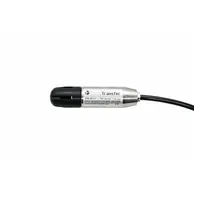
Measures nitrate optically with UV light directly in the water. No chemicals, no sampling, no waste.
Holds the probe just below the surface. When the water rises or falls, the float moves with it, so the probe always measures at the same depth.
The data logger in the cabinet reads the probe at fixed intervals, for example every 15 minutes, and transmits the values via LTE-M. Aquatos Web LTX →
A solar panel on the pole powers probe and logger. No mains connection is needed at the station.
The web portal shows the time series of every station. When nitrate reaches your limit, an alarm is sent by e-mail or SMS. Sensormanager →
Expandable: further parameters can be connected to the same data logger, for example conductivity, temperature or water level.
The type of installation depends on the water body, water level fluctuation and access. We advise you which option suits your site.
The probe hangs in a float guided by chains or a rail. It follows the water level, so the measuring depth stays the same.
Suitable for: Ditches, canals, polders, water bodies with changing levels
The probe is fixed in a pipe or bracket on a structure such as a weir, bridge or outlet.
Suitable for: Inlets and outlets, basins, water bodies with a constant level
The probe hangs in the well casing from 2 inches, directly in the groundwater. This measures nitrate where it matters for wells and drinking water.
Suitable for: Groundwater monitoring wells from 2 inches, wells upstream of waterworks
On larger water surfaces the probe can sit on an anchored monitoring buoy together with logger and solar panel. We plan this option individually with you.
Monitoring buoys →Suitable for: Lakes, reservoirs, storage basins
Two weeks at a ditch, as they typically look. After heavy rain, nitrate rises within a few hours and falls back over several days.

In the Delfland region of South Holland, greenhouses stand side by side with drainage ditches running between them. TerraTransfer nitrate stations have been measuring here continuously since 2023. The probes hang in floats in the ditch, the Aquatos Web LTX sits in a cabinet with a solar panel. If nitrate rises after a discharge or rain, it shows up in the Sensormanager straight away.
The 3D model on our home page shows greenhouses along a canal. Trigger a discharge and follow how the nitrate plume reaches the float, the limit is exceeded and the alarm goes out.
View the nitrate station in 3DOpens the home page with the globe. Works best on a desktop.
No. The probe measures optically with UV light directly in the water. There are no reagents, no pump and no waste.
You set the measuring interval in the data logger, for example every 15 minutes. We agree measuring and transmission intervals with you to suit the water body and power budget.
The Sensormanager compares every new value with the limits you have set. When one is reached, an alarm goes to the registered recipients by e-mail or SMS.
The optical window is cleaned regularly and the measurement checked. How often depends on the water body. On request we take care of installation and maintenance.
Yes. Further sensors can run on the same Aquatos Web LTX, for example for conductivity, temperature or water level. This turns the nitrate station into a water quality station.
Briefly describe your water body. We will get back to you with a proposal for probe, installation, logger and power supply.
Prefer to talk?
+49 2327 83 44 85-1
No running costs for data transmission: the SIM card is included. Devices, sensors and installation are part of the quotation.

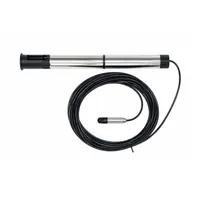 Aquatos Web LTX
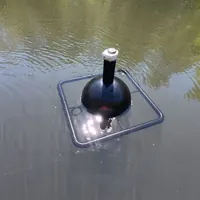 Monitoring buoys
 Sensors & adapters